 ThinkMarkets
Rapid price moves can close a leveraged position sooner than planned.
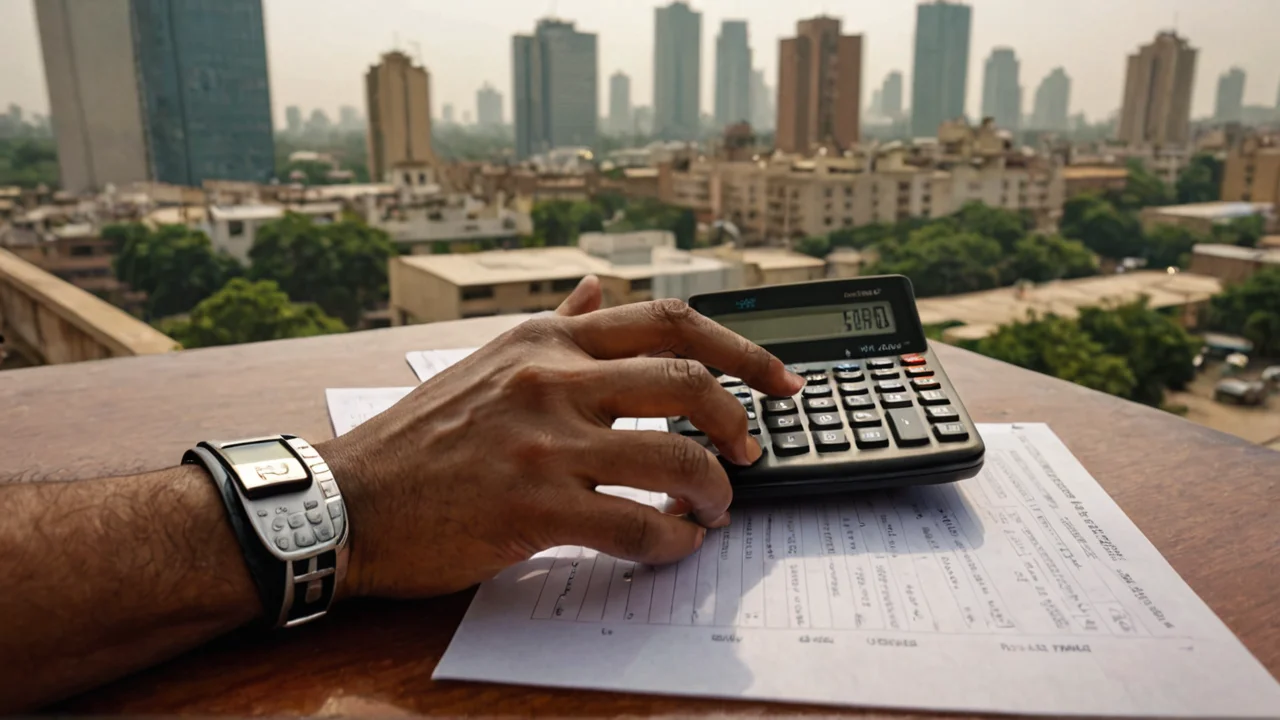
I've been trading with ThinkMarkets for years, and I still run almost everything from my smartphone. The pip calculator is one of those tools I open more often than I'd like to admit, usually when I'm about to size a trade and my brain refuses to do the math. So let me walk you through how it works, what it actually tells you, and the things I wish someone had explained to me before I started.
The direct answer: the ThinkMarkets pip calculator shows you the monetary value of a single pip move for your trade size, based on your account currency. You pick your currency pair, lot size, and account currency, and it gives you the pip value instantly. It's built into the ThinkTrader platform and available on the website, so you can pull it up on your phone without switching devices.
The real context for India: your account base currency will be USD, EUR, GBP, AUD, or CHF, because ThinkMarkets does not offer INR base accounts. That means the pip value is always calculated in one of those currencies, and you'll need to mentally convert it to rupees to understand your actual risk.
Pip value in rupees
The pip calculator converts a one-pip move into a cash amount for your position size. For a standard lot (100,000 units) of USD/CHF, one pip is USD 10. For a mini lot (0.1), it's USD 1. For a micro lot (0.01), it's USD 0.10. The calculator does this for you, instantly, for any pair and any lot size you throw at it.
I use it constantly during the day. I'll be on the train, thinking about a gold trade, and I need to know exactly what a 20-pip stop will cost me at 0.5 lots. Pull out the phone, type it in, and I have my number before the next station.
Sizing Trades on the Go
The hardest part about trading from a phone isn't the execution, it's the discipline. A pip calculator is part of that discipline. I check my position size against my risk limit before I even open the trade.
Let me give you a real scenario. I trade the Standard account, which means my spreads are around 1.1 pips on USD/CHF with no commission. If I want to risk USD 50 on a trade with a 25-pip stop, I need to know my lot size. The calculator tells me: 0.2 lots gives me a pip value of USD 2, so a 25-pip stop costs me USD 50. Done.
On the ThinkZero account, the math is slightly different because of the commission. The spreads are from 0.0 pips on USD/CHF, but you pay a commission of roughly USD 3.50 per side, which is about USD 7 round-turn per standard lot. The pip value itself doesn't change, but your breakeven moves because of the commission.
What the Calculator Doesn't Tell You
The pip calculator is a math tool, not a risk tool. It tells you the value of a pip move, but it does not tell you whether your position size is sensible for your account balance or for the leverage you're using.
This matters in India more than in most places. ThinkMarkets onboards Indian clients under the offshore entity TF Global Markets Int Ltd, which holds a Seychelles FSA licence SD060. That entity is not SEBI-registered, and ThinkMarkets has been added to the RBI Alert List of unauthorised forex platforms. For Indian residents, retail overseas FX and CFD trading is restricted under FEMA, and the available leverage up to 1:500 is not permitted under those rules.
If you're an Indian resident, this is a legal restriction you need to take seriously. The RBI and SEBI have a clear framework: you can trade INR-based currency pairs on recognised exchanges like NSE and BSE, but trading spot forex or CFDs with offshore brokers is not permitted.
The Base Currency Reality
Here's a practical quirk I had to learn the hard way. My account is in USD, but my expenses are in INR. The pip calculator gives me values in USD, and I have to convert them to understand my actual risk in rupee terms.
Let me give you a concrete example. If I buy a standard lot of USD/INR and the price moves 50 pips in my favour, the calculator tells me I've made USD 50. That's straightforward, but when I withdraw to my Indian bank account, I'm hit with a currency conversion, and the actual INR amount depends on the exchange rate at that moment.
The platform supports USD, EUR, GBP, AUD, and CHF base currencies, but there is no INR option. So every deposit I make gets converted into my base currency. I use bank/wire or Visa/Mastercard mostly, and I've also used Skrill and Neteller. The brokerage doesn't charge a deposit fee, but the currency conversion is built into the exchange rate you get, and that's a cost you don't see on a pip calculator.
How to Use It for Real Risk
I want to give you a practical framework. Here's how I use the pip calculator to stay disciplined when I'm trading from my phone.
First, I set my daily loss limit in my head before I open the app. Second, I use the pip calculator to size my position so that my stop loss, in pips, multiplied by my lot size, stays within that limit. Third, I check the margin requirements for the trade, because at higher leverage, the margin is lower but the risk is the same.
The relationship between lot size and risk is linear, but the leverage doesn't change the per-pip value. If I'm at 1:500 leverage, a standard lot of USD/CHF still has a pip value of USD 10. What changes is the margin required to open the trade. At 1:500, the margin for a standard lot of USD/CHF is roughly USD 220. At 1:100, it's about USD 1,100.
Cost per pip by account
The two main account types work differently, and the pip calculator is useful for both, but the cost structure changes the math.
| Account | Min Deposit | Spread | Commission | Pip Value Impact |
|---|---|---|---|---|
| Standard | ~USD 50 | ~1.1 pips on USD/CHF | None | Lower trading cost per pip |
| ThinkZero | USD 500 | From 0.0 pips on USD/CHF | ~USD 3.50/side | Lower spread, add commission |
The Standard account is simpler. If the spread is 1.1 pips, your trade starts 1.1 pips in the red. On a standard lot, that's USD 11 of immediate cost. The ThinkZero account has a raw spread, but you pay the commission, so for a standard lot, you're paying about USD 7 round-turn regardless of the pair. For smaller lot sizes, the ThinkZero commission can feel heavy. A micro lot, 0.01, still costs you USD 3.50 per side in commission, which makes it expensive for tiny position sizes.
I've stuck with the Standard account for most of my trading because my average position size is between 0.5 and 1.5 lots, and the spread cost is predictable. When I'm scalping the majors during the London session, I switch to ThinkZero because the raw spreads are worth the commission.
What You Actually Pay
The spreads on major pairs are competitive, but you're not just paying the spread.
| Instrument Group | Instruments | Typical Spread Profile | Notes |
|---|---|---|---|
| Forex Majors | USD/CHF, USD/CHF, USD/CHF | 0.0 - 1.1 pips | ThinkZero raw, Standard fixed-ish |
| Forex Minors | USD/CHF, USD/CHF | 1.2 - 2.0 pips | Depends on market volatility |
| Indices | 17 index CFDs | Spread-based | Tracks the underlying future |
| Metals | Gold, Silver | Spread-based | Silver spreads can widen |
| Shares | 1,500+ share CFDs | Spread-based | US shares have tighter spreads |
| Crypto | 20+ crypto CFDs | Spread-based | High volatility, wider spreads |
The commission on ThinkZero is about USD 3.50 per side, which is USD 7 round-turn on a standard lot. Compare that to the Standard account's 1.1-pip spread on USD/CHF, which is USD 11 round-turn. If you're trading larger volumes, ThinkZero wins. If you're trading micro or mini lots, Standard is usually cheaper.
There is no India-specific promotion at ThinkMarkets.
Comparing to Local Options
This is where I have to be realistic with you. SEBI-recognised exchanges in India allow currency derivatives on INR pairs like USD/INR, EUR/INR, GBP/INR, and JPY/INR. The margin requirements there are around 3-5% of notional, which works out to roughly 20-30x leverage, not the 100x-500x that offshore brokers advertise.
The trade-off is simple. Exchanges give you legal clarity and INR settlement, but the trading hours are limited to 09:00-17:00 IST, or 09:00-19:30 IST for cross-currency pairs. ThinkMarkets gives you 24/5 access, thousands of instruments, and your choice of MT4, MT5, ThinkTrader, or TradingView, but you're operating outside the approved legal framework for Indian residents.
I've traded both ways. The exchange-based platform feels safe, but it's limited in instruments and hours. The offshore broker feels open, but you carry the regulatory risk.
The Platform Experience
The pip calculator lives inside the ThinkTrader app, which is the proprietary platform. I use it more than MT4 or MT5 for day-to-day trading because the mobile experience is genuinely good. The interface is clean, the charts load fast, and the pip calculator is one tap away from the trade ticket.
On MT4 and MT5, you can use the built-in pip calculators or install custom indicators, but I find the native ThinkTrader tool is good enough and less cluttered. The TradingView integration is also useful for charting, and you can use the pip value calculations that TradingView provides directly on the chart.
The push notifications are reliable. I get an alert when my stop loss or take profit is hit, and the trade closes on the server without needing my phone to be on.
What This Means for You
The pip calculator is a tool that makes your trading process cleaner, but it doesn't change your legal position or your risk profile. It solves the math problem, not the decision problem.
What I care about, after years of trading, is the process. I calculate my position size, I set my stop, I know my worst-case loss in rupees before I hit the buy button, and I follow my plan. The pip calculator helps me with the first part of that, and the built-in stop-loss and take-profit features handle the rest.
Do I wish there was an INR base account? Yes, because the currency conversion on deposits and withdrawals adds a layer of friction I'd rather not deal with. But the platform quality, the support I've received, and the range of instruments keep me here.


Questions
How do I calculate pip value for a trade on the ThinkMarkets app?
Open the ThinkTrader app, go to the trade ticket for your chosen instrument, and you'll see the pip value calculated based on your lot size and account currency. If you need to calculate before opening the trade, use the pip calculator tool on the ThinkMarkets website or in the ThinkTrader platform. The value is always shown in your base currency (USD, EUR, GBP, AUD, or CHF), not INR.
Does the pip calculator work for ThinkZero accounts?
Yes. The pip calculator shows the per-pip value the same way for both Standard and ThinkZero accounts, because pip value depends on lot size and instrument, not account type. The difference is in the cost structure: ThinkZero has tighter spreads from 0.0 pips on USD/CHF but charges a commission of roughly USD 3.50 per side. You need to add that commission to your risk calculation manually.
Is using ThinkMarkets from India the same as using an Indian broker?
No. ThinkMarkets operates under the offshore entity TF Global Markets Int Ltd, which holds a Seychelles FSA licence SD060. It is not SEBI-registered, and the RBI has added it to the Alert List of unauthorised forex platforms. Indian residents are restricted under FEMA from trading spot forex or CFDs with offshore brokers. A SEBI-recognised broker on NSE or BSE offers INR settlement and legal clarity but is limited to INR-based currency pairs and exchange trading hours.